
Ding: The Cauldron. Supreme good fortune. Success. Fire over wood: the image of The Cauldron. Thus the superior man consolidates his fate by making his position correct.
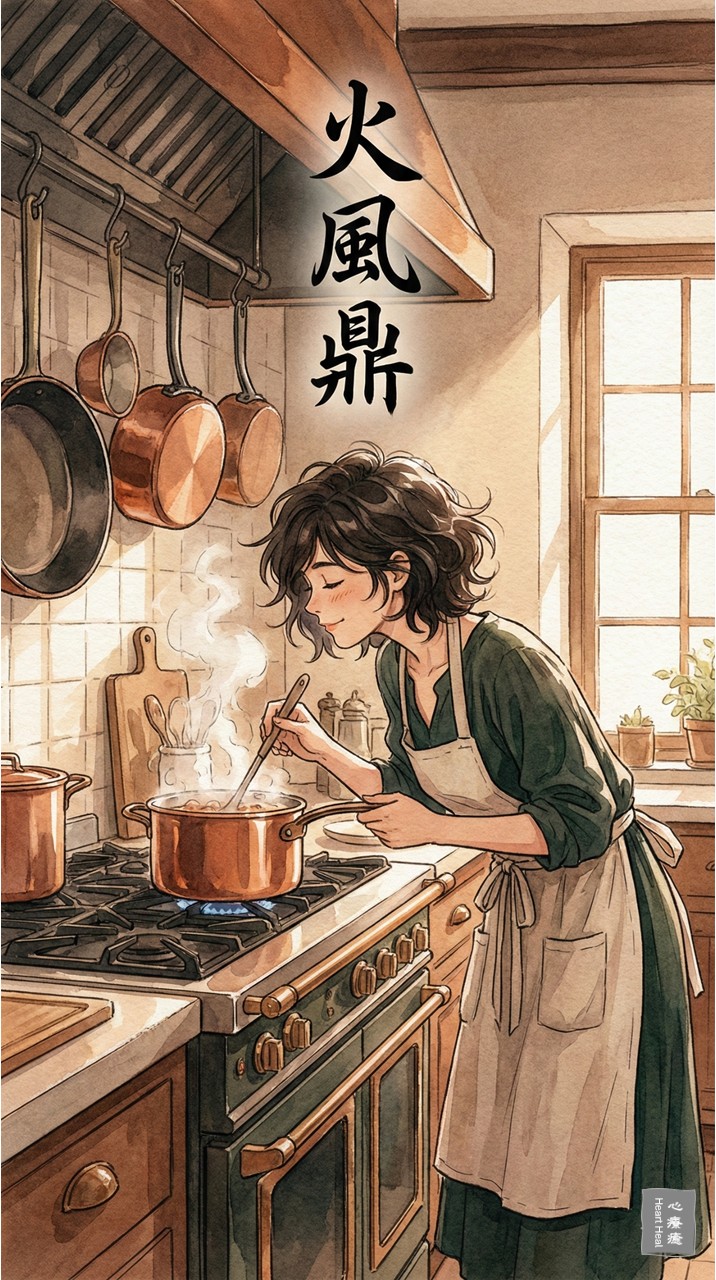
Following the radical changes of the previous hexagram (Gé), do you feel your life entering a new phase where stability is paramount? “Ding” represents the ancient cauldron, a symbol of “transformation” and “establishment.” Fire over wood transforms raw ingredients into nourishing food, symbolizing the refinement of crude experiences into life-giving wisdom. This is a time to rebuild quality and establish a new order.
Psychologically, this is a lesson in “self-integration” and “psychological alchemy.” We often carry raw, unprocessed emotions. Ding reminds you that you need a stable container (the psyche) and focused awareness (fire) to cook these emotions into wisdom. The hexagram advises “making one’s position correct,” teaching you to settle your mind and body and focus on your true mission. Can you endure the slow “simmering” process required for your soul to become substantial?
Practice “stability.” A cauldron’s greatest risk is a broken leg (line 4), representing a collapse due to lack of ability or character. Focus on internal quality rather than outward display. When your inner self becomes clear and abundant, you naturally project an air of dignity. Trust that a high-quality life is forged through time and the right intensity of internal fire.
Laozi said: “We put thirty spokes together and call it a wheel; but it is on the space where there is nothing that the utility of the wheel depends.” A cauldron is useful because it is empty inside. Ding is the practice of “emptiness of heart.” Clear out the mental clutter so that wisdom can enter. While modern life focuses on the splendor of the vessel, Taoism teaches that the vessel is for containing truth, not for show. Guard your center, and nourishment will naturally arise.